Posts

Learning to Fly: How Turmoil in the Civil Aviation Industry Reflects the Simplistic Understanding of Capitalism by Trade Unions

Image
"That's not flying, that's just falling with style''. These are the words famously uttered by the character of Woody from Pixar's hit film Toy Story , in relation to Buzz Lightyear's bravado with regard to flying. This assertion poignantly captivates the recent tenseness within the civil aviation business that has seen a selection of high-profile airlines plummeting into insolvency. Many such incidents have occurred as a result of extraneous adverse factors, as well as officials succumbing to trade union pressure. The overarching argument that I shall propose in this article is that much industry turmoil that pertains to labour union complaints reflects the reactionary stance of said unions, for their constant emphasis on the greed of chief industrial giants is the result of a black-and-white conceptualisation of globalisation and global capitalism. I will use recent shakeups in the aviation sector to illustrate this point, especially the Air Berlin scandal...

Brexit: The Genesis of a Return to Pre-Globalisation Nation-States?

Image
Brexit has undoubtedly been on the tips of everyone’s tongues ever since the shock vote last year sent rippling chills throughout Europe and the rest of the globe. This subsequently gave rise to mass panics in many European countries due to the fear of far-right political demagogues being provided impetus to produce a similar outcome in their respective countries. Notable countries that had been afflicted by this collective fear include the Netherlands and France. In the case of the latter, perhaps a potential “Frexit” would have come to fruition had President of the National Front Marine Le Pen defeated current French president Emmanuel Macron in the election earlier this year. Yet after the initial jitters, waters appear to have settled and ardent opposition to the European Union is less present in the public sphere than it was a year ago. The main contention of this article will be that Brexit aims to signify the potential dawn of a new era of international politics, one in which t...

Down by the Seaside: Current Political and Economic Dynamics in the Shipping Industry

Image
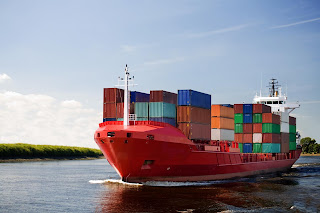
The shipping industry is currently facing a challenging time due to the necessity of recovering from the crisis spurred by the collapse of the once-seventh largest shipping giant in the world, Hanjin, as well as a requirement to adapt to an increasing demand for technological advancements that seek to minimise costs by removing as many parties as possible from the transportation process. Even further, such progress has created a vicious battlefield in which emerging giants such as Amazon and Maersk, whom I shall attend to in the latter part of this article, are engaged in an ongoing struggle for ownership of the largest market share. In this entry, I aim to analyse the broad impact of Hanjin's fall on the shipping industry across the globe as well as convey how this, together with the wider issue of overcapacity, are paving the way for new methods of transport to be promoted by up-and-coming players in the market. The parallels between the impact of Lehman Brothers' collapse on...

The Global Financial Crisis Part II: ...And Justice for None

Image
When the worldwide financial turmoil erupted following the collapse of Lehman Brothers and the broader subprime mortgage crisis that fundamentally led to an erosion of trust in financial markets, the Earth stood still. Having covered the genesis of the worst gamble in history in my previous post, in this sequel I shall endeavour to provide a clear-cut analysis of the global economic consequences of this blunder and hereto policy responses, as well as the subsequent polemic debates in employment law surrounding job cuts, equality of opportunity across all genders, and racial discrimination. The global financial crisis, after boiling for a long-time under the housing bubble, manifested its deleterious effects in the middle of 2007 and through to 2008. All around the world stock markets plummeted, large financial institutions such as Lehman Brothers floundered, and governments in the wealthiest of nations were forced to step in with bailout plans in order to rescue their respective c...

The Global Financial Crisis Part I: The Gamble That Stumped Them All

Image
The global financial crisis of 2008 that emerged as a consequence of the burst of the American housing bubble has undoubtedly been the most severe socio-economic calamity of the 21st Century thus far. Initially affecting the subprime buyers venturing into an unstable housing market, the fiasco quickly spread to investment banks and other financial institutions. This led to widespread bankruptcy filings and severe restrictions to credit access, effectively halting any form of investment due to a then-toxic financial system. In this entry, I shall attempt to argue via Ulrich Beck's theory of the Risk Society that this financial apocalypse was inevitable due to the very fact that we currently inhabit a world that is predicated on manufactured risks, yet our lack of understanding of said risks and associated ontological insecurities impede the creation of a secure social climate. Risk has become normalised and in their actions, people adopt both optimistic-fatalistic attitudes due to t...

The U.S.-North Korea Nuclear Crisis: A Dangerous Game of Chess

Image
Recent American foreign dealings have been significantly dominated by the increasing threat of a North Korean nuclear attack, due to the staggering progress made by the latter in its development of intercontinental ballistic missiles potentially capable of carrying nuclear warheads. North Korea's overzealous and megalomaniac leader shows no intention of relenting, being adamant in stating repeatedly that the nation's survival is wholly dependent on the complete decimation of the United States. Furthermore, due to the watertight bilateral relationship between North Korea and China, the U.S. finds itself between a rock and a hard place and it seems, from ongoing political dynamics, that this crisis is part of a larger, dangerous game of chess between two of the world's leading economic powers: America and the People's Republic of China. North Korea is an important pawn in China's plans for economic dominance, as outlined in Xi Jinping's doctrine of the "Chine...

Recep Tayyip Erdoğan: Prophetic Leader or Political Suicide?

Image
It has become commonplace to label Turkey as an autocracy following the despotic policies of its president, Recep Tayyip Erdoğan. A wave of ideological purges succeeded the failed coup d'etat of June 2016, by a faction within the Turkish Armed Forces, namely the Peace at Home Council. The motivating factors behind the coup appear to be a combination of an increasing feeling of eradication of secularism within the country, and Turkey's declining influence on the global political stage. The supposed spearhead of this entire operation has been namechecked as Fethullah Gullen, a Turkish religious figure who used to be an ally of the president but withdrew his support amidst the 2013 Turkish corruption scandals, and whom Erdoğan equally accused of having organised. However, it is highly likely that such accusations serve as pretenses for the president to consolidate his grip over the country in an attempt to erode the influence Kemalist ideology and revert to Islamic rule, thus effe...